

African Health Systems: Five Priorities for Resilience 2030
A look back at the Dakhla African summit on health sovereignty, covering five resilience priorities, the Dakhla Declaration and the launch of the African Academy of Health Sciences.
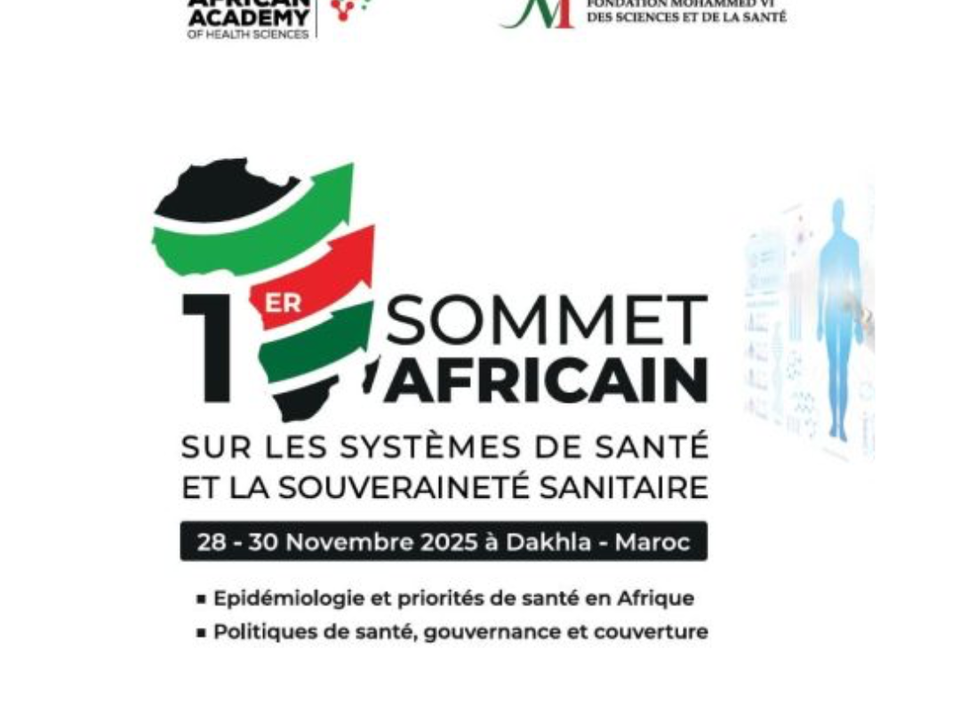
The 1st African Summit on Health Sovereignty and Health System Performance, held in Dakhla from November 28 to 30, 2025, marks a decisive step in affirming the continent’s health autonomy and resilience. Initiated by the Mohammed VI Foundation for Science and Health (FM6SS), the event crystallized an ambitious pan-African vision based on innovation, South-South cooperation and the strengthening of endogenous capacities.
Bringing together nearly 200 African experts in person, including more than 20 presidents of National Councils of the Order of Physicians, and more than 1,000 virtual participants, the Summit functioned as a true laboratory of ideas, culminating in the Dakhla Declaration.
The Five Pillars of Stronger Health Sovereignty
The high-level debates identified five crucial priorities for transforming and securing African health systems:
- Public health and epidemiology: Make prevention the cornerstone of policies, with a focus on infectious diseases, non-communicable diseases, and mental and environmental health. The establishment of an integrated and reliable health information system was emphasized.
- Infrastructure and equitable access to care: Improve local infrastructure and secure supply chains to guarantee fair and equitable access to care for all populations.
- Training and retention of skills: Invest massively in human capital to close the critical shortage of nearly 6 million health workers expected by 2030, through adapted training and mobility programs for young residents.
- Financing and governance: Ensure stronger financing that is sustainable, with emphasis on transparency and governance efficiency, particularly by expanding Universal Health Coverage (UHC) and strengthening public-private partnerships (PPPs).
- Research & Development (R&D) and innovation: Support African R&D through the development of local production hubs, the strategic integration of artificial intelligence and Big Data platforms for crisis anticipation and epidemiological surveillance.
The African Academy of Health Sciences (AAHS): A Driver of Innovation
Alongside the Summit, the inauguration of the African Academy of Health Sciences (AAHS) on November 29, 2025 in Dakhla gives this momentum a lasting institutional structure. Led by FM6SS, AAHS positions itself as a continental hub of innovation and training.
Its key missions:
- Develop research on African public-health challenges.
- Offer adapted training and promote excellence in teaching, relying on cutting-edge infrastructure such as Ibn Sina University Hospital and Mohammed VI University of Health Sciences (UM6SS) in Dakhla, which already includes health-sciences engineering.
- Collect and analyze health data to guide public policy through a Big Data platform.
- Facilitate mobility for specialists and create pan-African scientific networks.
AAHS aims to transform health systems by placing Africans at the center of designing solutions, in collaboration with WHO and the pharmaceutical industry, thereby consolidating South-South cooperation.
Conclusion and Outlook
The Dakhla Summit and the inauguration of AAHS reflect a strong political will, aligned with Morocco’s royal orientations, to make health sovereignty a concrete and achievable objective for the continent. The adoption of the Dakhla Declaration reaffirms the right to health for all, intra-African solidarity and the continent’s leadership in defining its health future.
By institutionalizing reflection and action through a dedicated think tank (the Summit itself, now anchored), a consolidated pan-African network of the Order of Physicians and a training and R&D institution (AAHS), Africa is equipping itself with strategic levers to build resilient, integrated and autonomous health systems, positioning it as a global strategic actor in the face of future health crises.