

The Care Economy: Toward a National Strategy for Morocco
Analysis of the care economy in Morocco, covering invisible family work, aging, the geriatric-care deficit, professionalization, fiscal levers and the need for an integrated national strategy.
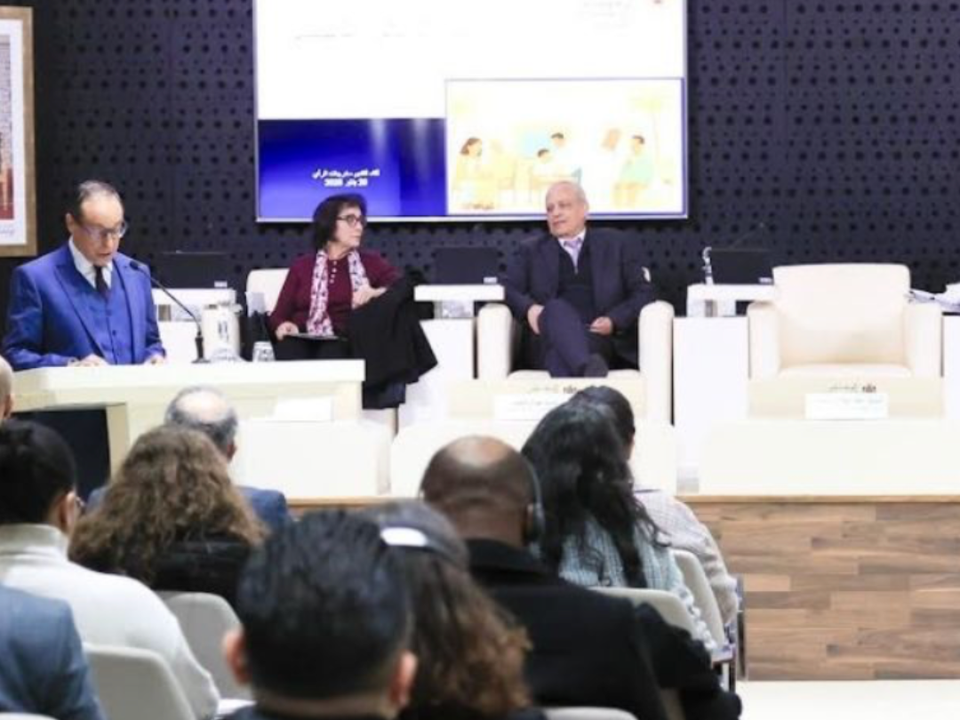
As Morocco accelerates the reform of its health system, the Economic, Social and Environmental Council (CESE) has just shed light on a strategic area: the care economy. During a meeting held on January 28, 2026 in Rabat, the Council’s President, Abdelkader Amara, presented the opinion entitled "Recognizing and organizing the economy of care for others in Morocco: challenges and outlook". For Vitavox Institute, this issue is not only social; it is a major lever for the health economy and human development.
An Urgent Diagnosis: The Erosion of Traditional Solidarity
Morocco is undergoing deep demographic shifts: population aging, smaller family units and a rise in chronic diseases. Yet the care offer remains fragmented and centered on the classic hospital response. Care for others, including support for older people, people with disabilities and childcare, still relies 95% on family solidarity, often invisible and unpaid.
According to HCP figures cited by CESE, if unpaid domestic and care work were integrated into national GDP, it would increase by 19%, of which 16% would be generated by women. This opportunity cost weighs heavily on women’s participation in economic life and perpetuates systemic precarity. Women spend an average of 5 hours per day on care for others, compared with only 43 minutes for men.
Infrastructure Under Pressure
The care sector in Morocco suffers from a structural deficit. The mismatch between exploding needs and the current care offer is alarming:
- A geriatric medical desert: As the demographic transition accelerates, Morocco has only 6 resident doctors specializing in geriatrics for the entire national territory.
- A derisory and centralized care offer: With only 72 residential facilities for older people nationwide, infrastructure is saturated. More seriously, geriatric specialization is almost nonexistent: it is limited to only two facilities, both concentrated in the Rabat-Sale-Kenitra region, leaving the rest of the Kingdom without adapted structures.
This institutional void forces families to compensate alone for the shortcomings of the state, without guidance or medicalized support.
The Care Economy: A Source of Jobs and Growth
CESE’s approach confirms that care is a productive sector of value. The recommendations of the opinion’s rapporteur, Ms. Zahra Zaoui, highlight three fundamental pillars for our health system:
- Unified and territorial governance: The Council recommends creating a National Body dedicated to governing the care economy. The goal is to break the current fragmentation between the health, social and education sectors. This body would steer an integrated national strategy designed to distribute the burden between the state, local authorities, the private sector and civil society.
- Professionalization of care occupations: Move home-support and geriatric-assistance occupations out of the informal sector. The shift to a formal economy requires the creation of a national occupational framework and certification pathways to guarantee decent work. It also requires legal recognition of family caregivers, including training mechanisms, specific leave, adapted compensation and full integration into the social-protection system.
- Fiscal levers and local services: To make care accessible to as many people as possible, CESE suggests exempting certain home-support services from VAT and providing tax advantages for employing families. It also calls for faster investment in childcare facilities and local medico-social structures.
Social Demand Confirmed by Citizens
The relevance of these recommendations is corroborated by the citizen consultation conducted through the Ouchariko.ma platform. More than half of participants said they regularly use care services, while 60% deplore the lack of recognition for caregivers. The high cost of services and the lack of qualified personnel remain the main obstacles identified by the population.
The Sustainability of the Health System at Stake
Integrating the care economy into public policy is a sine qua non condition for the success of Universal Health Coverage (UHC).
Without a structured care sector, pressure on public hospitals and social-protection funds will become unsustainable. Investing in home care and dependency prevention would not only improve Moroccans’ quality of life, but also optimize hospital costs by avoiding prolonged hospitalizations caused by a lack of social support.
Conclusion: Toward an Integrated National Strategy
CESE is now calling for a National Care Economy Strategy. At Vitavox, we recommend that this strategy be connected to current social-protection reforms. It is time to move from a care model based on individual sacrifice, mainly by women, to a model of shared responsibility between the state, the private sector, civil society and families.
Care is no longer just a budgetary burden; it is an investment in the future for stronger health and social sovereignty.