

1st International Conference on the Care Economy and Social Protection
Summary of an international panel on the care economy, covering the value of care work, gender equality, social protection and sustainable public policy.
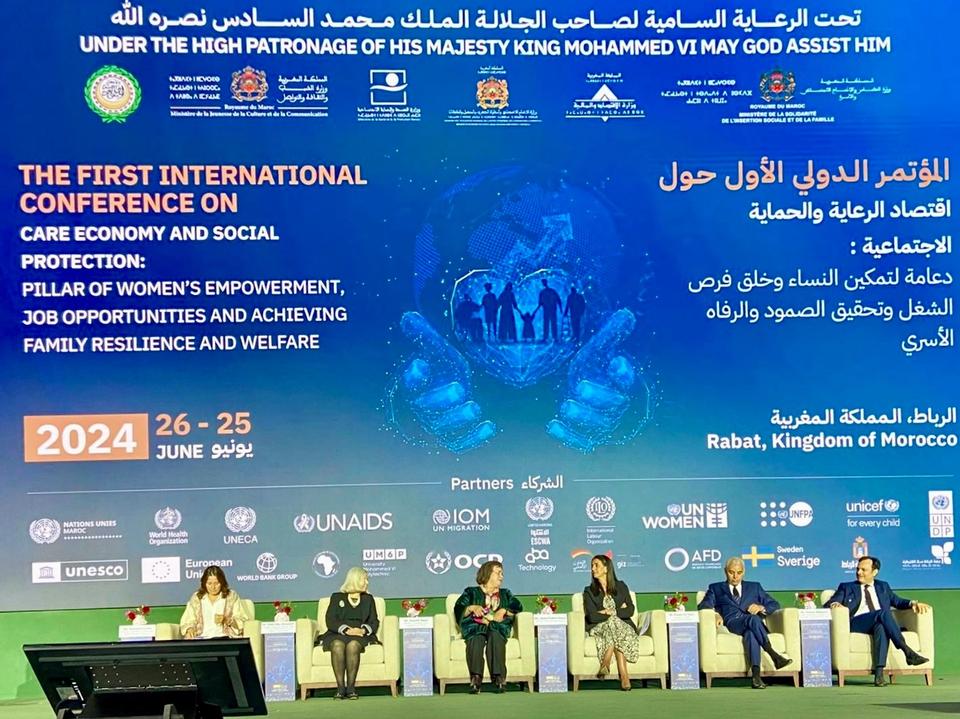
Summary of the Panel on the Care Economy: Concepts, Approaches and Trends – 1st International Conference on the Care Economy and Social Protection
The conference “The Care Economy: Concepts, Approaches and Trends” during the 1st International Conference on the Care Economy and Social Protection brought together experts from diverse backgrounds to discuss the challenges and prospects linked to the care economy. The presentations by the different panelists highlighted the diversity of approaches and proposed solutions for strengthening and transforming care systems worldwide.
Vitavox Institute attended this debate; below is a summary of the discussions and reflections shared during the event.
The Crucial Importance of Care Systems
Jemimah Njuki, Head of the Economic Empowerment Section at UN Women, emphasized the importance of inclusive and sustainable care systems. According to her, “care is fundamental to the well-being of individuals, societies, economies and ecosystems.” She highlighted the need for an approach based on human rights, state responsibility and gender equality to transform care systems. This perspective is essential to meet growing care needs exacerbated by demographic transitions and economic and environmental crises.
Raquel Coello Cremades, macroeconomic policy adviser and global lead on the care economy at UN Women, reinforced this point by discussing the transformation of care systems in the context of the Sustainable Development Goals (SDGs). She recalled that care work, carried out primarily by women, often remains invisible and undervalued. “To achieve the SDGs, it is crucial to recognize and value care work,” she stated. Her presentation offered frameworks and policies for integrating care into sustainable development and gender equality.
Public Policy and Social Protection
Céline Peyron Bista, social protection and employment policy specialist in the social protection department of the International Labour Organization (ILO), emphasized the importance of social protection as a crucial investment to promote inclusive and sustainable growth by supporting individuals through social and economic transformations. She explained that social protection encompasses policies and programs aimed at reducing social risks, such as poverty and social exclusion, by ensuring access to healthcare and income security throughout life. She recalled ILO Recommendation No. 202 on social protection floors, which illustrates the global commitment to provide a basic level of social security for all. Social protection and the care economy are interdependent, and their joint implementation can improve social outcomes, reduce future costs and develop the skills needed for a robust care economy.
Rouba Arja, social affairs officer and care economy coordinator at ESCWA, discussed the centrality of the care economy to sustainable development. She examined the measures needed, from legal frameworks to public policies, to move this complex sector forward. “The care economy links various interconnected socioeconomic factors,” she explained, highlighting the importance of a holistic approach to promoting well-being and sustainable development.
Valeria Esquivel, employment and gender policy specialist at the ILO, presented the ILO’s tripartite conclusions on decent work and the care economy. She detailed the “5R” framework for decent care work, emphasizing the importance of policies that promote recognition, reduction, redistribution, remuneration and representation of care work. “These policies are essential to support care workers and improve working conditions,” she insisted, recalling the support the ILO can offer countries in this area.
Conclusion
The conference highlighted the importance of an integrated and collaborative approach to strengthening the care economy. The interventions converged on the need to recognize the value of care work, integrate technological advances and establish robust public policies to support the sector.
Faced with these challenges, how can governments, businesses and civil society collaborate innovatively to develop sustainable and inclusive care systems that value care work, improve working conditions and promote gender equality?
Some avenues to explore:
- Establish public-private partnerships to invest in care-sector infrastructure and training.
- Set up social-dialogue mechanisms involving care workers in policy development.
- Encourage social and technological innovation to improve working conditions and quality of care.
- Design integrated policies that value care work, promote gender equality and ensure adequate social protection.