

Analysis of the Chapter 30 Revision
Analysis of the revision of Chapter 30 of Morocco’s pharmaceutical customs nomenclature, covering import duties, local production, medicine access and health sovereignty.
Morocco has launched a major reform affecting the tariff regime for pharmaceutical products, a key sector for public health and the national economy. This initiative focuses on revising customs duties applied to imports, which are defined by Chapter 30 of the customs nomenclature.
This tax change is not an isolated event, but a legislative measure carried by the Executive and included in successive Finance Bills (PLF):
- The 2025 Finance Bill marked the initial intention to realign the tariff system with industrial competitiveness objectives.
- The 2026 Finance Bill maintains and gives concrete form to this direction, making adjustment of the fiscal framework a lever for health sovereignty.
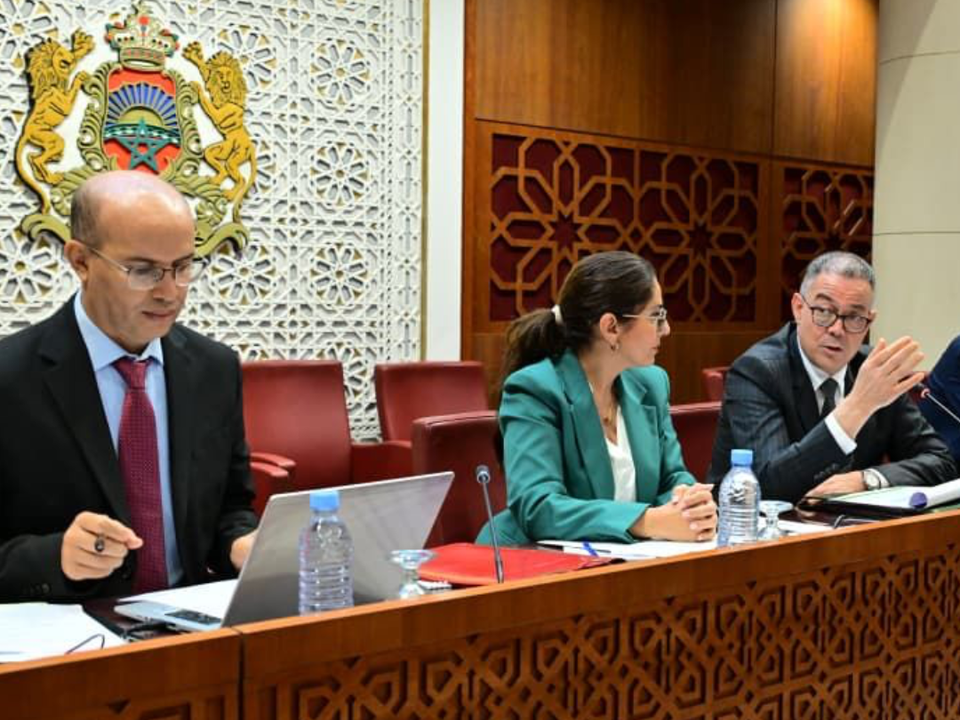
In this legislative context, the Moroccan Agency for Medicines and Health Products (AMMPS) intervened in its capacity as a technical body. It recently presented the findings of an in-depth impact study to Parliament’s Finance and Economic Development Committee. This document serves as a strategic reference framework for determining precisely how to apply the law by modulating import taxes.
What Is Chapter 30 of the Customs Nomenclature?
Chapter 30 refers to a specific section of the Harmonized System (HS) of the World Customs Organization, the standardized international classification of goods traded in global commerce. Entitled "Pharmaceutical products", this chapter covers an essential range of health-related goods:
- Medicines and other medicinal preparations;
- Biological products, whether raw or intended for medical use;
- Vaccines, toxins, cultures of living micro-organisms and immunological products.
The revision presented to Parliament therefore concerns the customs duties (import taxes) applicable to all these products when they enter Moroccan territory.
I. What the Finance Bill Provides
The Finance Bill (PLF) provides the legal framework for this tariff reform. The tax provisions it introduces are a direct response to the persistent imbalance observed in the pharmaceutical sector, requiring use of the customs tool.
The Legal and Economic Diagnosis
The existing tariff system is characterized by a rigid fiscal duality:
- Customs duties for pharmaceutical products manufactured locally can reach 30%.
- Imports of products with no national equivalent benefit from a reduced rate of 2.5%.
However, this framework is being strained by growing import momentum. Analysis of flows reveals a notable rise in external purchases: Morocco imported 10.521 billion dirhams (DH) worth of medicines during the first ten months of the current year, compared with 8.360 billion DH in 2022.
This massive growth in value has been accompanied by a slight increase in the number of operators, from 382 importers in 2022 to 394 this year. Although this increase reflects a certain market vitality and diversification, the scale of the financial volumes reaffirms the Kingdom’s structural dependence on external supply for its health needs.
This dependence creates a critical dual problem: a major outflow of foreign currency affecting the trade balance, and growing pressure on the financial resources of social-security funds.
The Finance Bill’s Intent
The Finance Bill provides for the adjustment of customs duties to be used as a strategic tool for regulation and incentive. The overall objective, confirmed by the Minister Delegate in charge of the Budget, is not to increase customs revenue, but to create new financial margins in the medicine value chain. These margins are essential to preserving the sustainability of social-security funds and easing pressure on patients’ finances.
II. What AMMPS Proposes
The AMMPS technical study, presented before Parliament’s Finance Committee, is the reference document proposing how the Chapter 30 reform should be applied.
The Agency stressed that this approach, based on scientific rigor and consultation, marks a decisive step toward strengthening national pharmaceutical sovereignty.
The objectives of this reform, as articulated by AMMPS in its intervention, are threefold and aim for a lasting balance:
- Support for local production: Stimulate local production by adjusting customs duties on products with an equivalent manufactured in Morocco. The issue is to protect national industry and create added value and jobs.
- Access to care: Facilitate access to essential and innovative medicines that do not appear in the Agency’s annexes, thereby guaranteeing medical coverage.
- Lasting balance: The Agency is working to preserve a balance between industrial competitiveness and protection of public health, a necessary approach for a strong, autonomous and resilient pharmaceutical sector.
Conclusion
The final phase of the reform, conducted within the Finance and Economic Development Committee, focuses on rigorous examination of the technical proposals formulated by AMMPS. The success of the tariff adjustment rests on two clear Government imperatives: first, indisputable factual rigor, reflected in the insistence of the Minister Delegate in charge of the Budget on understanding patients’ real need for products not manufactured locally. This requirement ensures that customs modulation does not compromise public health.
Second, the discussions reaffirm that the reform’s objective is exclusively strategic and social. The goal is not to increase customs revenue, but to use the fiscal tool to protect industry and preserve the sustainability of social-security funds. The issue in this conclusion is therefore to finalize a tariff balance that reconciles the industrial competitiveness of the pharmaceutical sector with universal access to medicines for citizens.