

First Territorial Health Group Launches in Tangier-Tetouan-Al Hoceima
A look at the launch of the first Territorial Health Group in Tangier-Tetouan-Al Hoceima, covering regional governance, budget, human resources, digitalization and specialist shortages.
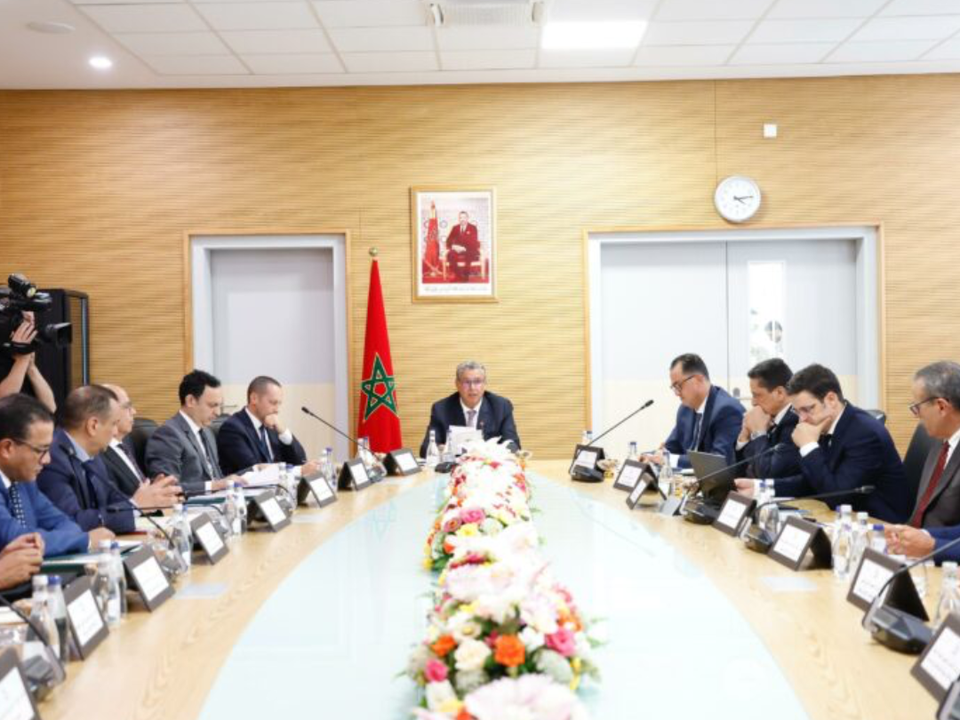
The Tangier-Tetouan-Al Hoceima region is inaugurating Morocco’s first Territorial Health Group (GST), marking a key step toward regional health governance aligned with the vision of the New Development Model.
This pilot mechanism, intended to be gradually extended across the Kingdom, held its first board meeting on July 29, 2025, at Tangier University Hospital, chaired by Head of Government Aziz Akhannouch. On that occasion, the GST’s action program, 2025 budget and organizational chart were adopted. The group is headed by Dr. Mohamed Akkouri, former director of Mohammed VI University Hospital in Tangier. The board brings together institutional representatives, elected health professionals and independent experts, in line with the established regulatory framework.
What Is a GST?
It is a legally and financially autonomous mechanism whose main objective is to ease the burden on the ministry and university hospitals through more local and effective management. Replacing the former regional health directorates, it brings together most civilian public facilities and organizes the care offer around a clear hierarchy:
- Local primary health care facilities (ESSP).
- Provincial hospital centers (CHP),
- Regional hospital centers (CHR).
- Central university hospital.
In addition, each GST has a board of directors bringing together government representatives, financial authorities and health professionals (research professors, doctors and nurses).
Its operation is part of a clear legal framework: the entire mechanism is governed by Law No. 08-22, with an implementing decree issued in 2023 for Morocco’s 12 regions. Although autonomous, GSTs remain under the state’s financial supervision to guarantee transparency and public accountability.
Key Missions:
The Territorial Health Group (GST) has the central mission of structuring and coordinating the care offer at regional level, connecting the different levels of care: local primary health centers, provincial hospitals, regional hospitals and university hospitals.
It ensures decentralized budget management, steers coordination between public health facilities and supervises the launch of calls for tender. The GST also plays a strategic role in developing medical skills through training organization and research promotion, thereby strengthening the effectiveness and quality of health services closer to population needs.
Human Resources and Digitalization:
Nearly 9,900 health professionals are covered by the Tangier-Tetouan-Al Hoceima GST. A standard statute is currently being discussed with unions to harmonize rules on recruitment, pay, mobility and compensation, as well as procedures for internal staff transfers between the region’s different facilities.
The objective is twofold: to guarantee better working conditions and create a motivating, attractive framework to retain talent. This human-resources reform is an essential lever for supporting the GST’s effectiveness and ensuring continuity of care, particularly in rural and peripheral areas.
To optimize care coordination and follow-up, the GST is placing strong emphasis on digital tools. Current initiatives include:
- Hospital information system rolled out to 20 hospitals, enabling integrated management of patient records.
- Digitalization of 289 health centers to streamline access and medical-data management.
- Online appointment platform to reduce waiting times and improve patient orientation.
- Electronic vaccination record and interconnected patient database for stronger preventive follow-up and better continuity of care between the different levels of the system.
This digital transition aims to make the patient pathway smoother while improving transparency and traceability of medical acts.
Challenges and Outlook:
By structuring the care offer, optimizing budget management and betting on digital innovation, the GST aims to significantly improve the quality and accessibility of health services. However, the success of this pilot model will depend on its ability to address one of its major challenges: the shortage of medical specialists.
With only 18 emergency physicians and 63 anesthesiologists for more than 4 million inhabitants, the region faces a deficit that could slow the mechanism’s ramp-up.
The challenge will therefore be to reconcile structural reform, medical-career attractiveness and equitable resource distribution to guarantee the effectiveness of this model across the Kingdom.
Conclusion:
The launch of the Tangier-Tetouan-Al Hoceima GST marks a structuring step in the reform of Morocco’s health system, focusing on decentralization, coordination and digital innovation. By modernizing care organization, strengthening human capacity and digitalizing services, this pilot model embodies the ambition of a health service that is closer to citizens and better adapted to local needs. But in the face of the persistent shortage of specialists, the success of this reform will depend on its ability to attract, train and retain medical talent. The question remains: can the GST fulfill its promise of equitable, high-quality access to care in all regions of the Kingdom?