

The Global Fund expands pooled procurement to support national transitions
The Global Fund is opening pooled procurement to other sources of funding to support national transitions. Its bridge financing mechanism nevertheless raises fiscal risks that need oversight.
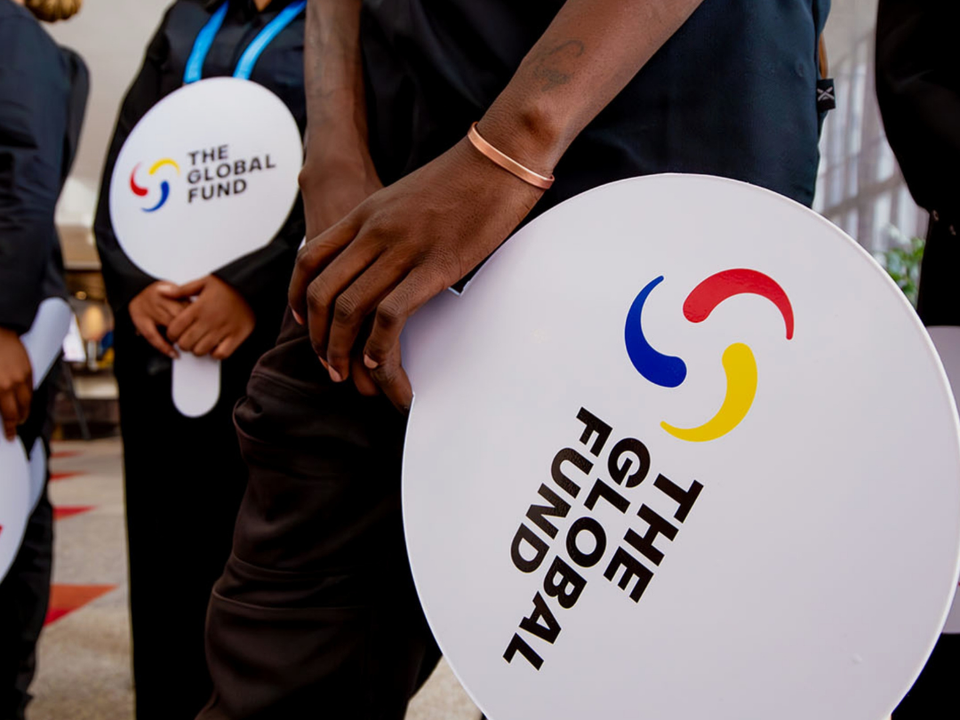
Meeting in Geneva on 9 and 10 July 2026 for its 55th meeting, the Board of the Global Fund to Fight AIDS, Tuberculosis and Malaria approved opening its Pooled Procurement Mechanism to countries using domestic or non-Global Fund financing, alongside a ‘self-financing’ bridge financing mechanism for countries unable to make advance payments. In 2025, the platform managed around $1.2 billion in procurement, including $1.02 billion in grant-funded health products, benefiting more than eighty countries. The decision addresses a sustainability challenge: preserving access to negotiated prices for countries becoming ineligible for grants. Otherwise, the transition to self-financing could increase the unit cost of essential medicines and cause supply disruptions.
Strategic context
The decision forms part of the rollout of the eighth grant cycle (GC8, 2027–2029), for which the Board approved, in February 2026, the allocation of $10.78 billion to countries from total contributions of $12.64 billion. The implementation timetable has been shortened, requiring difficult choices: initial funding requests already incorporate a refocus on primary health care and explicit transition pathways.
The scale of the forthcoming transitions is unprecedented. The Global Fund expects 61 disease components across 35 countries and three multi-country programmes to leave its direct support during GC8, followed by a further 21 components in 12 countries in the next cycle. These will join the 52 components in 38 countries that have already transitioned since the adoption of the sustainability and transition policy in 2016. Management stresses that the challenge is no longer transition itself, which has long been practised, but its scale and pace amid tightening external funding for global health. The strategy concentrates resources on the least-resourced countries with the highest disease burdens, along pathways determined by each country’s context, disease burden and economic situation.
The Board opened its session by reviewing the first half of 2026, the final stretch of the seventh cycle. Board Vice-Chair Bience Gawanas recalled that, as countries assume greater responsibility for financing their health systems, they should not lose access to affordable, quality-assured health products. This is precisely the principle the Board’s decision seeks to preserve. Operationally, lenacapavir, an injectable medicine for HIV prevention, was launched in nine countries, with the number of recipients increasing from 20,000 at the end of May 2026 to 49,000 at the end of June 2026.
Case analysis: supply security or risk transfer?
The Pooled Procurement Mechanism is a structural lever in the Global Fund’s model: by pooling demand from more than eighty countries, it negotiates lower prices than an individual country could secure on the international pharmaceutical market. Until this decision, access remained primarily tied to grant-recipient status. The new policy now allows governments and non-governmental organisations in eligible or transitioned countries to use the platform with domestic funding or resources from other donors. The accompanying bridge financing mechanism targets countries without the cash needed to pay for pooled orders in advance, a common constraint in lower-middle-income countries.
The institutional account of a ‘self-financing’, risk-free bridge is nevertheless challenged by contemporary independent analyses. The Center for Global Development observes that the Global Fund’s approach to transition does not resolve the structural tension between eligibility based on income classification and actual needs, and that continued access to negotiated markets cannot, on its own, ensure fiscal sustainability for countries leaving support. Keeping middle-income countries within the scope of grants, it notes, tends to reduce the resources available for poorer settings with higher disease burdens.
Field research by ThinkWell on Global Fund transitions in Indonesia, Pakistan and Bhutan highlights that including a line in a national budget says little about whether the system it financed can continue to operate. With external debt servicing already weighing heavily on developing countries, a credit mechanism, even on preferential terms, to advance the cost of stock can effectively replace a health grant with a recurring cash-flow burden. An analysis by Think Global Health similarly stresses that international financing should complement domestic investment and allow a transition pathway for heavily indebted countries, rather than accelerate an unsustainable transfer of costs.
Risk governance and institutional transition
Beyond the platform, the Board approved a revision of its Risk Appetite Framework, moving risk management from an oversight stance towards active steering. In support of this revision, the Secretariat presented its 2025 Annual Risk Management Report, concluding that the institution remains resilient despite an increasingly volatile and constrained operating environment. On the budget side, the Board approved a GC8 implementation plan within an operating expenditure ceiling of $930 million, combining immediate savings with a more structural transformation of the operating model, including greater use of automation and artificial intelligence.
This reorganisation comes during an institutional transition for the Global Fund itself: the selection of a new Executive Director, Board Chair and Vice-Chair is due to conclude in October 2026. Continuity in implementing the decisions taken at this 55th meeting will depend in part on the new leadership’s ability to sustain political support for them.
Policy pillars and recommendations
First pillar: secure access to negotiated prices as a condition for sustainable transitions. Opening the platform to non-Global Fund financing is necessary but insufficient: its effectiveness will depend on national finance ministries’ capacity to budget for pooled orders in advance within their own appropriations.
Second pillar: audit the bridge financing mechanism’s impact on sovereign debt. Presented as self-financing, the mechanism should undergo independent scrutiny of its access and repayment terms, to prevent it from effectively becoming another debt instrument for transitioning countries.
Third pillar: preserve technical support during restructuring. The revision of the Risk Appetite Framework and the compression of Secretariat operating expenditure, adopted in the same sequence, require separate monitoring: tighter budget management must not erode technical support capacity for transitioning countries precisely when that support is most critical.
Fourth pillar: align the platform’s expansion with regional manufacturing and other donors. Broadening the platform must not crowd out emerging African pharmaceutical production. Coordination with Gavi and other global health financing partners should be documented through shared indicators to avoid duplication between competing procurement platforms.
Institutional challenges and conclusion
The Board’s decision reflects an explicit evolution in the Global Fund’s model, from a grant mechanism towards a market-shaping mechanism accessible to a wider range of funding sources. This responds to a real constraint, the accelerating pace of national transitions, rather than a deliberate choice to diversify. The main institutional challenge is to prevent it from effectively transferring fiscal risk to countries with limited fiscal space, without the protections offered by the grant model.
The quality of independent implementation monitoring, both of the bridge financing mechanism and of the platform’s actual use with domestic funding, will determine whether this reform strengthens or weakens pharmaceutical supply security in transitioning countries. Independent analysts’ objections concern not the principle of pooled procurement, whose value is established, but the conditions under which its financial burden is transferred to national budgets.