

Health and Human Development: Lessons from the 2023 Annual Meetings
The 2023 Annual Meetings reaffirmed the central role of health in development, from African health resilience to local production and public-private cooperation.
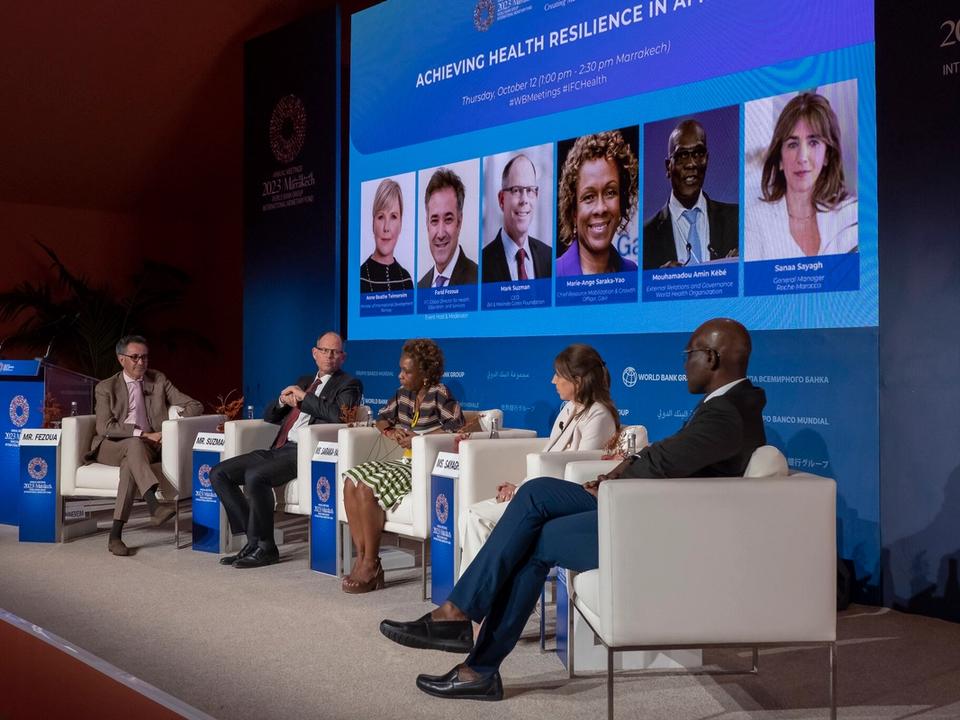
The importance of health in human and economic development was highlighted during the 2023 Annual Meetings of the World Bank Group and the International Monetary Fund (IMF).

At the Annual Meetings, the President of the World Bank, Ajay Banga, the Managing Director of the IMF, Kristalina Georgieva, Morocco’s Minister of Economy and Finance, Nadia Fettah, and the Governor of Bank Al-Maghrib, Abdellatif Jouahri, issued a statement highlighting the crucial importance of improving health systems and strengthening global health security.
The discussions at the IMF and World Bank Annual Meetings shed clear light on the fundamental role that health plays in global development. A healthy population is an essential driver of economic growth and prosperity. Robust health systems are needed to ensure equitable access to care and treatment, enabling every individual to realize their full potential. The COVID-19 pandemic starkly exposed the need to invest in preparedness and health resilience. Experts gathered at the Annual Meetings emphasized the urgency of improving universal health coverage and strengthening national health systems.
Investing in African Health Resilience
The session “Achieving Health Resilience in Africa” particularly highlighted the African continent’s unique health challenges and opportunities.
The panel, composed of prominent figures such as Mark Suzman of the Bill & Melinda Gates Foundation, Marie-Ange Saraka-Yao of Gavi, Sanaa Sayagh of Roche Africa, Mouhamadou Amine Kébé of the World Health Organization and moderated by Farid Fezoua, of International Finance Corporation, underscored the power of strong partnerships and strategic investment to strengthen health capacities and promote sustainable economic development.
Speakers highlighted the importance for Africa of strengthening its capacity to develop local production instead of depending on imports. They recalled that African countries currently produce only 1% of their vaccine needs. Developing local production in the medical field requires long-term, progressive strategies. This helps ensure sustainability and the availability of quality, effective and affordable products. Yet most African countries do not invest enough in the medical field.
Public-Private Cooperation: An Essential Pillar
Participants also emphasized the need to coordinate the efforts of the public and private sectors. Cooperation between the public and private sectors must be comprehensive and complementary. The private sector plays a crucial role in investment in medical products and innovation. These two elements are an essential lever in this field. To make this possible, a stable market is needed, with access to accurate data on the local market. Investors can then make informed decisions and direct investment optimally.
The Challenges of Resilience
The challenges of health resilience were also discussed, including the lack of infrastructure, difficulties in access to health services (only 30% of health facilities on the continent have the equipment and resources needed to carry out medical examinations) and the shortage of qualified health professionals (the continent has only around 34% of the health workers it needs).
Conclusion
In conclusion, the 2023 Annual Meetings served as a high-level platform to highlight the inseparable link between health and human development.
The debates and statements by global leaders underscored the need to invest in resilient health systems to build a prosperous and equitable future for all.
The commitment to global health remains at the heart of the international development agenda, guiding future action toward a healthier and more resilient future.