

Health Sovereignty in Africa
Analysis of GITEX Future Health Africa 2026 and African health sovereignty, covering local financing, production and regulation, data governance, training, AI and structuring partnerships.
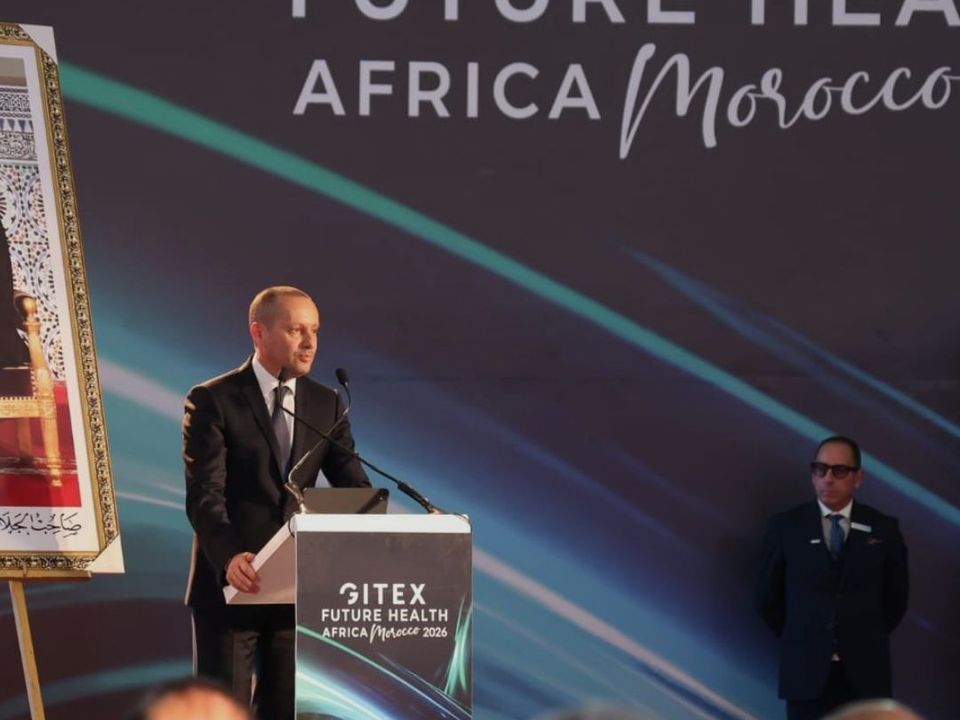
From 4 to 6 May 2026, the first edition of GITEX Future Health Africa brought together more than 300 exhibitors, ministers, international experts, startups and investors from more than 30 countries. Beyond the momentum of an inaugural event, the summit raised a fundamental question now running through all health systems on the African continent: how can Africa design, produce, regulate and govern its own health systems, rather than remain dependent on logics built elsewhere, by others, for other realities?
That question has a name. It is called health sovereignty. And according to all the summit speakers, it was at the heart of every panel, every partnership signing and every technological demonstration presented over those three days.
1. Why Health Sovereignty Has Become Urgent
To understand why health sovereignty emerged as the central theme of GITEX Future Health Africa 2026, one must first understand where the continent is coming from.
For decades, African health systems have been built, financed and often operated with structural dependence on external aid, international supply chains and imported medical and technological expertise. Essential medicines, medical devices, hospital-management software and clinical protocols: a significant share of these fundamental elements came, and still largely comes, from outside the continent. This dependence is not simply economic. It is epistemological: it means that the solutions deployed in Africa were often designed for other contexts, other infrastructures and other epidemiological realities.
The COVID-19 pandemic brutally exposed the fragility of this model. When global supply chains stalled, when vaccines were captured by producer countries before being redistributed to the rest of the world, and when African health systems had to face a major health crisis with limited resources and strained infrastructure, the lesson was clear: a continent that does not control its own capacity for health production, regulation and governance remains vulnerable, regardless of other progress achieved.
Added to this is considerable demographic and epidemiological pressure. The health sector faces a projected global shortage of nearly 6 million health workers by 2030. In Africa, this reality is amplified by a well-documented phenomenon: every year, the continent loses thousands of doctors, nurses and specialists who leave to practice in Europe, North America or the Gulf countries. Medical brain drain is not only a human-resources problem; it is a sovereignty problem. A health system that cannot train and retain its own professionals cannot claim true autonomy.
It is in this context that the notion of health sovereignty emerged, not as a political slogan, but as an operational necessity. And it is this context that gave GITEX Future Health Africa 2026 its full significance.
2. Morocco as an Emerging Model - and Its Limits
Within the summit, Morocco occupied a particular position: host country, case study and potential model for the rest of the continent. This position deserves precise examination, distinguishing what has already been achieved from what remains a work in progress.
On the achievements side, the progress is real and documented. The Minister of Health and Social Protection, Amine Tahraoui, stated during the opening ceremony that Morocco already has the tools needed to support the continent’s transformation: artificial intelligence, telemedicine, epidemiological algorithms and assisted-diagnosis systems. The reform of mandatory health coverage, AMO, raised population coverage from 42% in 2020 to more than "88% in 2025", a remarkable performance that places Morocco among the most advanced countries on the continent in terms of financial protection against illness. The rollout of the National Digital Health Card is also presented as a lever for budget efficiency,with projected savings of MAD 100 million per year. Framework Law 06-22, adopted in 2022, provides an ambitious legislative architecture built around four pillars: governance, human resources, healthcare provision and digitalization.
But the minister himself was careful to qualify this picture. During his intervention at the summit, he pointed to what is still missing: coordination. "What we do not yet have today is coordination," he said, emphasizing the need to build a common African market for medicines and medical devices, and to develop coordinated approaches to vaccine production and epidemiological surveillance.
This nuance matters. It illustrates a tension familiar to all health systems in transition: the gap between stated ambitions and operational reality on the ground. Morocco has laid solid foundations. They still need to be consolidated, extended across the entire territory and connected to a coherent continental dynamic.
3. The Pillars of a Sovereign Health System
Across the panels and discussions at GITEX Future Health Africa 2026, several conditions were identified as essential to building truly sovereign health systems in Africa. These conditions are not only technological. They are economic, institutional, human and cultural.
Finance Its Own Health Coverage.
The first condition of health sovereignty is financial. As long as African health systems depend mainly on international aid and external financing to function, their autonomy will remain limited. Expanding universal-coverage mechanisms financed by national contributions and robust health-insurance systems is presented as an essential prerequisite. Morocco’s AMO model is cited as a reference, while recognizing that transposing it into other national contexts requires deep adaptation.
Produce and Regulate Its Own Medicines and Medical Devices.
Dependence on pharmaceutical imports is one of the most documented vulnerabilities of African health systems. Developing local production capacity, building independent and competent regulatory agencies, and harmonizing regulatory frameworks at continental scale are priorities identified by summit participants. The launch of the MAHIR program - Moroccan AI for Health Implementation and Readiness - and the signing of a Memorandum of Understanding between the Mohammed VI Foundation for Science and Health and the Moroccan Agency for Medicines and Health Products illustrate this direction.
Govern Its Health Data.
Digital sovereignty is inseparable from health sovereignty. Health data - medical records, test results and care histories - now sits at the heart of every transformation in the sector. Who collects it? Who hosts it? Who has access to it? These questions are not only technical. They are political. The summit discussions highlighted the need to develop data-governance frameworks adapted to African realities, ensuring both patient protection and the ability of health systems to use this data to improve care.
Train and Retain Health Professionals.
Technology cannot compensate for the absence of qualified human resources. GITEX Future Health Africa speakers were unanimous on this point: training health professionals in new digital tools and artificial intelligence is a prerequisite for any successful technological rollout. The Mohammed VI Foundation for Science and Health presented its integrated approach, combining care, training, research and innovation, as a model response to this challenge. Clinical simulation, project-based learning and interdisciplinary collaboration among doctors, engineers, researchers and data scientists were presented as the teaching methods best suited to the transformations under way.
Regulate Artificial Intelligence Autonomously.
AI is occupying a growing place in African health systems, from assisted diagnosis to epidemiological surveillance and hospital-resource management. But summit participants insisted on one crucial point: AI tools deployed in Africa must be designed for African realities. Algorithmic bias, the unsuitability of models trained on unrepresentative data and the risks of technological dependence on international providers are concrete issues that require appropriate regulatory responses.
4. What GITEX Produced Concretely
Beyond speeches and stated ambitions, GITEX Future Health Africa 2026 produced tangible commitments that deserve to be documented.
The closing ceremony was marked by the signing of two structuring Memoranda of Understanding. The first was concluded between the Mohammed VI Foundation for Science and Health and the Moroccan Agency for Medicines and Health Products, with the objective of strengthening collaboration in research and innovation, and accelerating the translation of scientific work into concrete impact on health systems. The second brought together the Ministry of Health and Social Protection, the Mohammed VI Foundation for Science and Health and GIGALAB, as part of a drive to structure the health-innovation ecosystem.
In addition, the Mohammed VI Foundation for Science and Health announced on the second day of the summit the signing of a partnership with AstraZeneca focused on health research and innovation. ABA Life, the health arm of ABA Technology, launched on 5 May 2026 an artificial-intelligence infrastructure called Fusion AI for Sovereign Health. This infrastructure is based on an architecture connecting data, intelligence and action at national scale. It is built around five components: augmented telemedicine to expand access to care in underserved areas, precision and predictive medicine, AI-assisted drug discovery, health resilience for pandemic-risk detection, and coordination of critical interventions.
The MAHIR program - Moroccan AI for Health Implementation and Readiness - led by CIeS, is also a structuring initiative presented during the summit. It aims to turn AI’s technological potential into concrete gains in access to care, quality of care and system efficiency. Its rollout is based on the development of a White Paper on AI in health, led by a multidisciplinary team of national and international experts, with the goal of defining a pragmatic and ethical roadmap for integrating AI into Morocco’s health system.
Finally, the Mohammed VI Foundation for Science and Health inaugurated the first Precision Medicine Hub on the African continent, deployed within the Mohammed VI International University Hospital in Rabat. This hub is based on very high-level technologies intended to move medicine toward a more personalized, predictive, evidence-based and prevention-oriented approach, particularly to better anticipate and manage certain rare diseases.
5. The Obstacles That Remain
It would be inaccurate to present GITEX Future Health Africa 2026 as a moment of definitive rupture. The structural challenges holding back health sovereignty in Africa are deep and will not be resolved in three days of summit meetings, however promising they may be.
Regulatory fragmentation remains one of the most significant obstacles. Most health regulations in Africa remain national, making it difficult to build a coherent continental approach. Health-information systems remain largely disconnected from one another, limiting data circulation and slowing the emergence of an integrated ecosystem. This lack of interoperability is not only a technical problem; it is a governance problem that requires strong political will and long-term structuring investments.
The question of technological dependence is also sharply posed. While developing local and African solutions is presented as a priority, the reality on the ground shows that many African health systems continue to rely on tools developed by international actors, without always having the capacity needed to adapt, maintain or replace them. The risk is real: replacing one form of dependence with another, moving from dependence on imported medicines to dependence on foreign technology platforms.
Finally, the financing question remains unresolved. The ambitions stated for health sovereignty require considerable investment in infrastructure, training, research and the development of regulatory capacity. These investments cannot rely solely on national public resources or international aid. Developing innovative financing models involving the private sector, African diasporas and continental capital markets is a necessary condition for the sustainability of this transformation.
Conclusion
GITEX Future Health Africa 2026 laid important foundations. It showed that the conversation on health sovereignty in Africa is no longer theoretical; it is operational, carried by concrete actors, backed by institutional commitments and nourished by real technological innovations.
Trixie LohMirmand, CEO of KAOUN International, the event organizer, clearly summarized the issue during the closing ceremony: "This week represents the beginning of a new health economy, where technology and AI play a central role in transforming every aspect of health systems." But she was also explicit about what remains to be done: "This is an event. It is an engine. It is up to governments, the private sector and all stakeholders to decide how they want to use this engine."
This is precisely where the real test of African health sovereignty lies. Not in the ability to organize a large-scale summit, nor to sign partnership agreements. But in the ability to turn those commitments into effective public policies, operational infrastructure, training rolled out at scale and governance systems capable of lasting over time.
Africa has the human resources, demographic momentum and epidemiological urgency to build its own health systems. What it must develop is the institutional, regulatory and financial capacity to do so autonomously and sustainably. This is the project that Vitavox Institute intends to follow, analyze and support by contributing to data production, structuring the debate and fostering dialogue among all health stakeholders in Morocco and across the African continent.