

Medical Migration
Analysis of Moroccan doctors' migration as a public-policy issue, from public-sector attractiveness and career recognition to the diaspora and international cooperation.
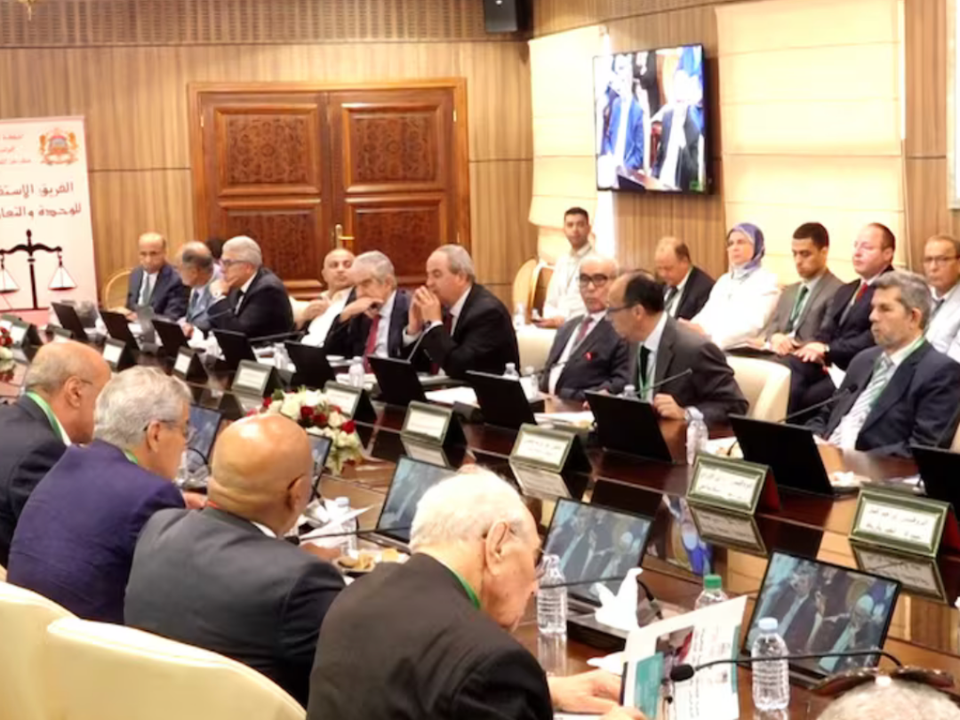
Following our previous analyses of imbalances in Morocco's health system, this article offers an updated reading of medical migration in light of recent orientations expressed during a meeting on the migration of Moroccan medical skills, organized by the Istiqlalian Group for Unity and Egalitarianism in the House of Councillors and the Foundation of Private-Practice Medical Teachers, held on June 4, 2025. This political moment marks a turning point: the mobility of Moroccan health professionals is now viewed as a strategic issue for public policy, calling for responses that are structural, incentive-based and cooperative.
An Initial Political Recognition of the Issue:
Held in Rabat, the meeting was marked by the intervention of the Minister of Higher Education, Scientific Research and Innovation, Prof. Azzedine El Midaoui, who called for the development of a public policy to regulate the migration of health professionals.
El Midaoui emphasized the need to distinguish between "forced" migration, driven by a lack of local prospects, and "chosen" mobility that is valued and regulated, and that could ultimately benefit both shores. This political recognition opens the way to a strategic debate in which several solutions and incentives have been proposed.
Regulatory Paths: Between Cooperation and Incentives:
With this in mind, several public-health experts, including Prof. Brahim Lakhal, dean of the Faculty of Medicine in Rabat, formulated concrete recommendations aimed at strengthening the resilience of Morocco's health system. These proposals follow a logic of structural reform, seeking to address the root causes of medical-skills migration. Among the levers mentioned by Prof. Lakhal are:
- Improving the attractiveness of the public sector.
- Revising doctors' contractual period.
- Establishing international partnerships by making migration a regulated movement and a lever for the health system.
- Valuing Moroccan doctors and supporting them throughout their professional careers.
- Encouraging doctors to return to Morocco with their skills.
- Improving structures and working conditions to make the system more attractive.
Still according to the dean, migration should not be viewed only through a negative lens, but should also be seen as an opportunity to seek broader horizons for training and acquiring expertise in a more developed system with open career paths.
Other experts also offered sharp views on the subject. Among them, the president of the Istiqlalian Group for Unity and Egalitarianism in the House of Councillors, Abdesslam Lebbar, believes that establishing a new public policy governing migration is necessary. Hence the creation of an interactive scientific space to discuss the phenomenon from several angles, combining its different dimensions with the aim of drawing on international experience.
The president of the Council of the Moroccan Community Abroad, Driss Yazami, for his part, pointed to the existence of fierce competition between countries around the world to attract Moroccan medical skills and health professionals.
Conclusion:
In conclusion, the recently expressed political will to better regulate the medical brain drain in Morocco represents an important step in recognizing a crucial issue for the national health system. However, this awareness must be accompanied by concrete, structural action capable of addressing the root causes of the phenomenon.
The success of such a policy will depend on a comprehensive reform that combines improved working conditions, recognition of medical careers, better territorial distribution of human resources and open dialogue with health professionals, including those in the diaspora.
Finally, it is essential to approach medical migration not only as a challenge to limit, but also as an opportunity to regulate, one that can enrich the national system through more flexible career paths and stronger international cooperation. Without this comprehensive and realistic vision, policy statements risk remaining hollow in the face of an urgent medical deficit that threatens quality of care for the entire population.