

Medical Students Mobilize Over Morocco's Training Reform
Analysis of Moroccan medical students' mobilization over training reform, from the six-year curriculum and internship conditions to sanctions and dialogue with authorities.
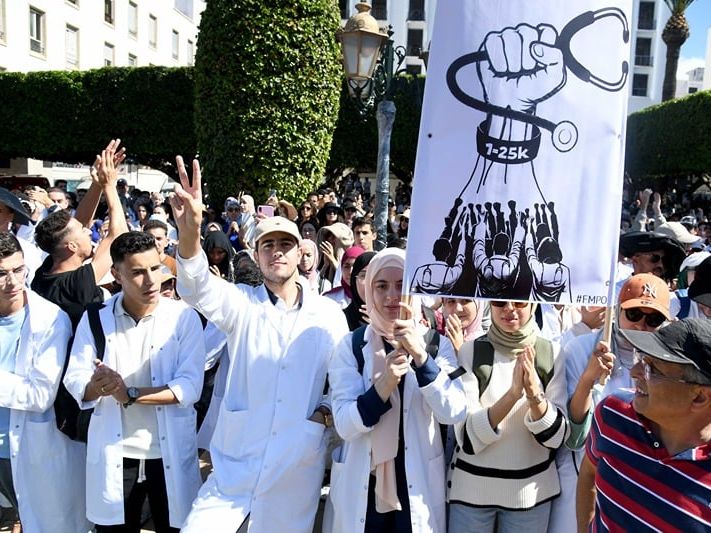
On Tuesday, June 10, 2025, medical students in Tangier reaffirmed their mobilization as part of a national movement that began several months earlier. This uprising continues the protests sparked by the reform of medical studies announced in 2022. According to the students, the initial promises have not yet materialized on the ground.
Tangier students are therefore expressing anger over their training conditions in public universities. These future doctors denounce the following findings:
- the ministerial decision to reduce the length of their studies from 7 to 6 years,
- teaching conditions considered deteriorated,
- the absence of real dialogue with university and health authorities.
This movement is part of a broader student-led dynamic across the country, aimed at denouncing the structural shortcomings and inconsistencies of the reform announced by the former Minister of Health and Social Protection together with the former Ministry of Higher Education.
But What Does This New Reform Actually Involve?
Seeking to respond to the chronic shortage of health professionals, the Moroccan government decided to overhaul medical training.
The Official Bulletin of March 13, 2023 describes the new standards of this reform. The arguments most often put forward by the authorities concerned are the following:
- Reduction in the length of studies from 7 to 6 years in order to improve the quality of the educational offering.
- Application of measures that significantly improve resident status in the new system.
- Increasing the number of students admitted each year across Morocco's public faculties.
- Expansion of hospital internship areas and infrastructure to adapt to the growing number of students.
- Introduction of a new decree to establish the status of externs, interns and residents.
- Increase in stipends (1,200 DH for third-, fourth- and fifth-year students and 2,400 DH for sixth-, seventh- and final-year internship students) to better recognize students' efforts and commitment.
Key Demands:
Medical students have formulated several demands, reflecting their concerns about the impact of the reform:
- Maintaining 7 years of study and excluding the cohorts affected by the 7-to-6-year reform.
- Improving hospital internship conditions, providing more educational resources, and not simply organizing "make-up" exams to compensate for months lost during strikes.
- Lifting disciplinary sanctions, including suspensions and proceedings, targeting some protesters.
- Upholding the promises made regarding improved student grants, training conditions, and the expansion and improvement of infrastructure.
- Opening an inclusive dialogue with the supervisory authorities.
What Does the Government Say?
For the government, this reform is a strategic lever and a fundamental pillar for the sustainable, sustained development of Moroccan public health. According to the two former ministers concerned, Abdellatif Miraoui, former Minister of Higher Education, and Khalid Ait Taleb, former Minister of Health and Social Protection: "it is a necessary, even vital, adjustment in order to significantly improve the quality of the educational offering and neutralize the failures of the old system, poor in content and rich in idle time."
Response From the Authorities
The authorities adopted an approach combining incentive measures and disciplinary action. Among the positive initiatives are:
- Infrastructure improvements, as at Ibn Sina Hospital in Rabat.
- Stipend increases for medical students, aimed at recognizing their commitment.
- Organization of make-up examination sessions and removal of zero grades assigned for absences during strikes.
However, some decisions have been criticized by students:
- Disciplinary sanctions: At least six students from Tangier, Rabat and Oujda were suspended for up to two years for "disrupting studies."
- Law enforcement interventions: Sit-ins in Rabat were dispersed, with reports describing forceful action.
- Insufficient dialogue: Students report that discussions with ministerial authorities, although initiated, did not address substantive issues such as the state of educational equipment.
Conclusion:
Persistent tensions between medical students and the authorities highlight the complexity of reforming Morocco's medical training system. Students' demands for quality training and inclusive dialogue reflect their desire to contribute to a strong health workforce, while government reforms seek to address systemic shortages through structural changes. To overcome this impasse, a balanced approach is needed: establishing a transparent framework for implementing reforms, with clear deadlines and measurable outcomes, could build trust. Regular, institutionalized consultations involving students, educators and policymakers would help align priorities. In addition, independent mediation, such as by the Kingdom's Ombudsman, could facilitate consensus.
Could this crisis become a lever for the sustainable modernization of medical training, or does it risk prolonging the structural fragilities of Morocco's public health sector?