

Morocco’s Major CHU Program Is Redrawing the Hospital Map
Analysis of Morocco’s major CHU program, covering regionalization of university-hospital care, territorial equity, GST governance, public investment and the human-resources constraint.
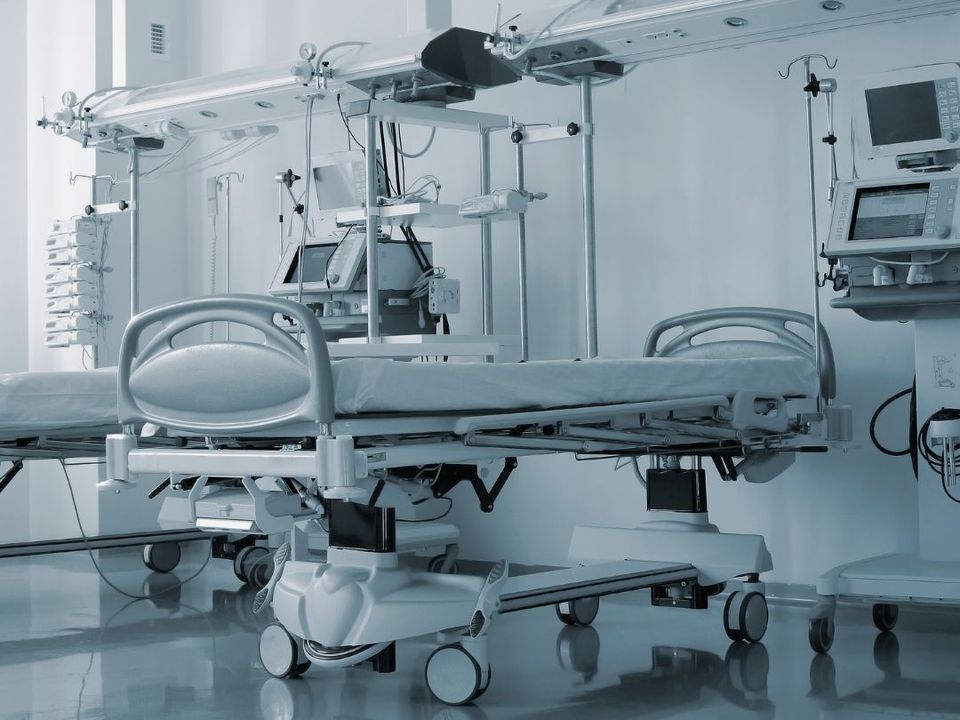
By 2027, Morocco plans to equip every region with a university hospital center. For a country whose university-hospital network was concentrated for decades in a handful of major cities, the change in scale is considerable: six new CHUs, investment exceeding MAD 20.6 billion and capacity of nearly 3,807 beds, to bring the highest level of care to territories that had previously lacked it.
The university hospital center (CHU) construction program launched by Morocco for 2027 marks a shift in national hospital policy. Designed to provide each region with a university-hospital hub, it aims to correct the historical concentration of tertiary capacities in a limited number of major cities. The real scope of this ambition, however, is measured less by the budget commitment than by the system’s ability to close the structural gap between delivery of infrastructure and availability of human resources and operating means.
Historical Concentration of Capacity
The university-hospital network was long organized around five hubs: Rabat, Casablanca, Fez, Marrakech and Oujda, more recently joined by Tangier. This geography left entire parts of the country without direct access to the highest level of care. The concentration is not only infrastructural: it feeds a cycle of mutual reinforcement in which CHUs capture most skills, leaving regions under-resourced, which discourages specialists from settling there and caps regional care capacity. The situation in Berrechid, where complex obstetric cases are referred to the Casablanca CHU because there is no local technical platform, illustrates this ceiling.
The Program’s Scope
The program covers six new CHUs, with investment exceeding MAD 20.6 billion and capacity of nearly 3,807 beds. The sequencing includes Laayoune (500 beds) and Guelmim (376 beds) among the first, Errachidia (500 beds) and Beni Mellal (520 beds) announced for the end of 2027, as well as reconstruction of Ibn Sina Hospital in Rabat. The case of Guelmim, whose regional hospital center was transformed into a CHU, illustrates the overall logic. This project is part of a broader effort: rehabilitation of 83 hospitals and 8,700 beds by 2028, 15 projects and about 3,000 beds in 2026 alone, driven by marked budget momentum: the Ministry of Health budget rose from MAD 19.7 billion to MAD 32.6 billion between 2021 and 2025, an increase of 65%.
Territorial Equity as the Goal
The stated objective is to consolidate territorial equity: ensuring that place of residence no longer determines the level of care available. A CHU is not limited to a care function; it combines tertiary care, training and research. As such, its location creates a regional training hub. The Dakhla example is documented: the recently opened university there has already doubled enrollment in medicine, health engineering and nursing sciences. The map of skills is therefore an endogenous variable in the program, not an exogenous given.
A Governance Reform
The rollout is part of a broader legal overhaul initiated by Framework Law No. 06-22 and then Law No. 08-22. The latter provides for the creation, in each region, of Territorial Health Groups, public establishments with legal personality and financial autonomy, responsible for developing and executing regional health policy. The CHU is conceived as the head of an integrated regional network under unified governance. As a result, the success of the new establishments will depend as much on the quality of regional governance as on delivery of the buildings. In April 2026, the competent parliamentary committee insisted on the need to accelerate delivery of major structuring projects.
The Human-Resources Constraint
The main question concerns staffing. The deficit is documented: additional need has been estimated at more than 96,000 professionals, including 32,000 doctors and 64,000 nurses. Medical density, at between 7.8 and 7.9 doctors per 10,000 inhabitants, remains below international references, and staff are concentrated in the Casablanca-Settat and Rabat-Sale-Kenitra regions, precisely the best-equipped areas. The training response is under way, with the objective of training more than 6,000 doctors per year, but training a specialist takes more than a decade. The infrastructure timetable and the skills timetable do not coincide, which is the program’s central tension.
Structural Obstacles
Three conditions for success remain to be met. First, budget sustainability: the initial investment is one-off, operating costs are recurring, and sustainability is among the major structural challenges identified. Second, career attractiveness: opening an establishment does not guarantee the arrival of specialists, since the issue goes beyond training to concern incentives, status and career quality. Third, execution pace: the ministry acknowledged that in 2024 it had found blocked construction sites and a signed governance agreement that had not been applied, requiring a change in steering.
Conclusion
The program moves the country from a metropolitan university-hospital network to a regionalized map. The investment is considerable, the timeline tight and the equity ambition clearly stated. The decisive test, however, lies not in inaugurating buildings, but in the ability to staff them, finance their operations over time and integrate them into the governance of the Territorial Health Groups. An under-resourced establishment corrects no inequality. The hospital map is being reshaped; its impact will depend on convergence among the timetables for skills, operating budgets and governance.