

Toward Proactive Public Health
Synthesis of the Global Health Diplomacy Symposium on the transition toward proactive public health in Morocco and Africa, built on prevention, risk reduction, regulation and regional cooperation.
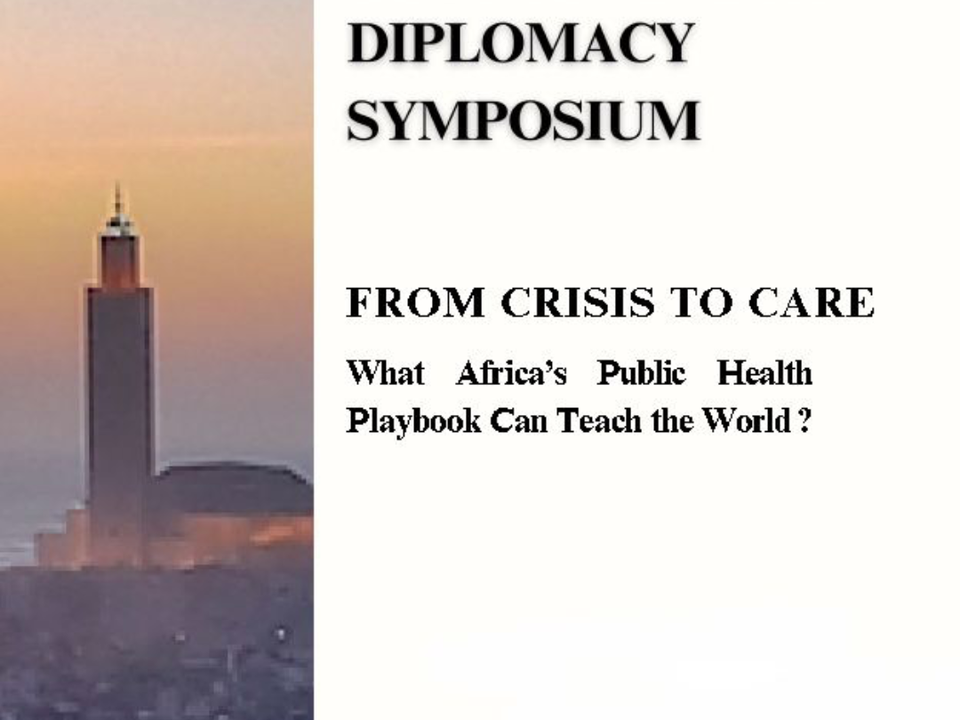
At the Global Health Diplomacy Symposium, held in Casablanca on September 4 and 5, 2025, medical experts, researchers, decision-makers and civil-society representatives debated the future of health policy in Morocco and Africa.
In a context marked by sustained demographic growth and a predominantly young population, African health systems face a turning point: remain in a reactive, treatment-centered logic, or move toward a proactive approach focused on prevention and risk reduction, adapted to local realities (Le Desk, 2025).
1. Health Systems Still Dominated by the Reactive Model
Historically, health management in Morocco and many African countries has focused on treating diseases, often at an advanced stage.
This approach carries a high human, economic and social cost, particularly as chronic diseases linked to contemporary lifestyles increase (tobacco, obesity, sedentary behavior, alcohol consumption).
British professor Peter Harper (King’s College London) notes that:
"In a young nation like yours, the only way to avoid the traps of the Western lifestyle is prevention. As you age, you will encounter the same problems we have faced, with an overloaded health system" (Le Desk, 2025).
2. Risk Reduction: A Pragmatic and Progressive Lever
Unlike a binary approach centered on prohibition, risk reduction consists of limiting the harms of harmful behaviors while taking social, economic and cultural realities into account.
- Tobacco: The Swedish example of snus and the rise of alternative solutions (e-cigarettes, heated tobacco) show that it is possible to reduce risks without resorting to outright prohibition. Harper stresses that "stop or die" messaging does not work, arguing instead for gradual substitution solutions (Le Desk, 2025).
- Obesity and sedentary lifestyles: Food re-education programs, promotion of adapted physical activity and personalized follow-up are more effective than guilt-based campaigns. New pharmacological options, including anti-obesity treatments targeting chronic inflammation, also offer promising prospects.
- Primary prevention: Vaccination, particularly against human papillomavirus (HPV), represents a major advance. Africa accounts for 23% of global cervical-cancer mortality, or 153,000 deaths in 2022. Generalized vaccination could prevent up to 85% of cases and save more than 30,000 lives each year (World Bank, 2022).
3. Strategic Actors at the Heart of Transformation
Implementing a risk-reduction approach requires inclusive health governance and coordinated mobilization:
- Civil society and academia: disseminating scientific evidence, raising awareness and contextualizing policies to strengthen social buy-in.
- International institutions (WHO, FDA, World Bank): a crucial role in scientific validation, standard-setting and technical support for African regulators. For example, the WHO Global Benchmarking Tool (GBT) measures countries’ capacity to ensure the safety of medicines and medical devices.
- South-South cooperation: an essential lever for developing adapted African models while avoiding the mistakes of aging Western systems. This proactive health diplomacy serves the continent’s health sovereignty.
4. Strategic Recommendations for Morocco and Africa
To make this transition concrete, several priorities emerge:
- Institutionalize prevention: integrate risk reduction into public health policy and universal health coverage.
- Diversify solutions: combine medical innovation, behavioral measures and social support rather than relying on a single approach.
- Strengthen regulation: scientifically regulate alternatives (heated tobacco, e-cigarettes, new treatments) to avoid commercial abuses and guarantee patient safety.
- Mobilize civil society: involve associations, local communities and religious or cultural actors to fight stigma and facilitate adherence.
- Promote regional cooperation: encourage experience-sharing between African countries in order to build endogenous models of health governance.
Conclusion
The transition toward proactive public health in Morocco and Africa rests on a logic of risk reduction, innovation and shared governance.
Rather than opposing prevention and treatment, the goal is to combine pragmatism and flexibility, placing science and local adaptation at the center of policy.
If these reforms are integrated progressively and inclusively, the continent will be able to anticipate future health challenges, reduce the burden of chronic diseases and build a health system that is more resilient, equitable and sustainable.